
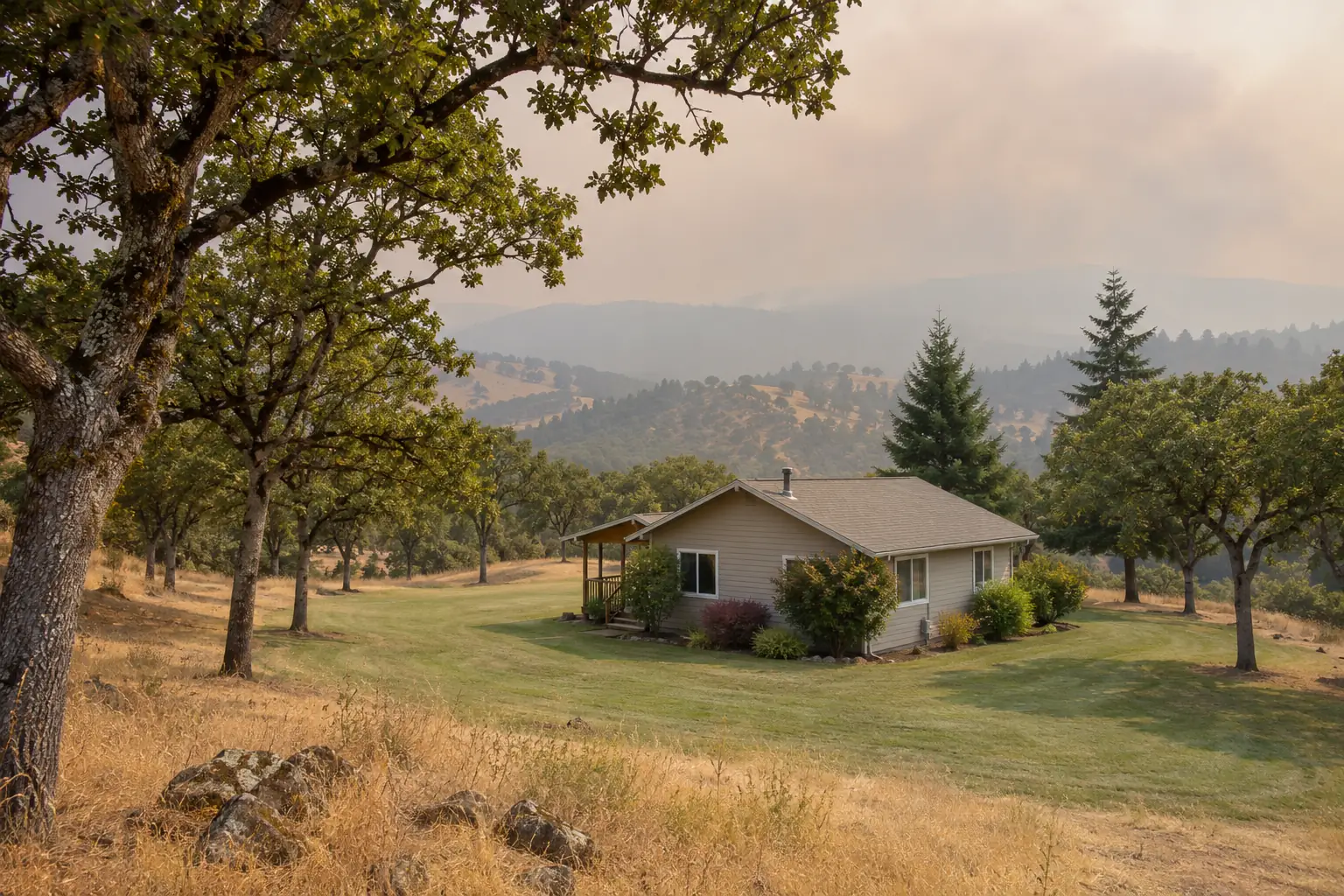
During fire season, tree work around Gold Hill follows the Oregon Department of Forestry's daily fire danger level. Saws are limited to cooler hours at moderate and high danger and banned at extreme danger, and brush burning is off. Call (541) 855-3080 to reach a CCB-licensed tree company, and find out how it schedules around these rules.
Tree Removal Gold Hill is a free referral service. It hands requests on and does none of the tree work itself. The company you are connected with decides when and how to do the job under the rules in force that day, and you decide whether to hire it. This guide explains when fire season usually runs, what the rules allow at each danger level, how defensible space guidance shapes which trees to cut or prune, and why many people book tree work in Gold Hill for fall, winter or spring. The home page explains how the service works.
When fire season runs around Gold Hill
Fire season in Jackson County is declared each year by ODF's Southwest Oregon District, and its start and end dates change with the weather. In 2026, the district's regulated closure proclamation took effect at 12:01 a.m. on May 15, 2026. In 2025, the district ended fire season effective October 14, 2025, according to a notice from Jackson County Fire District 3.
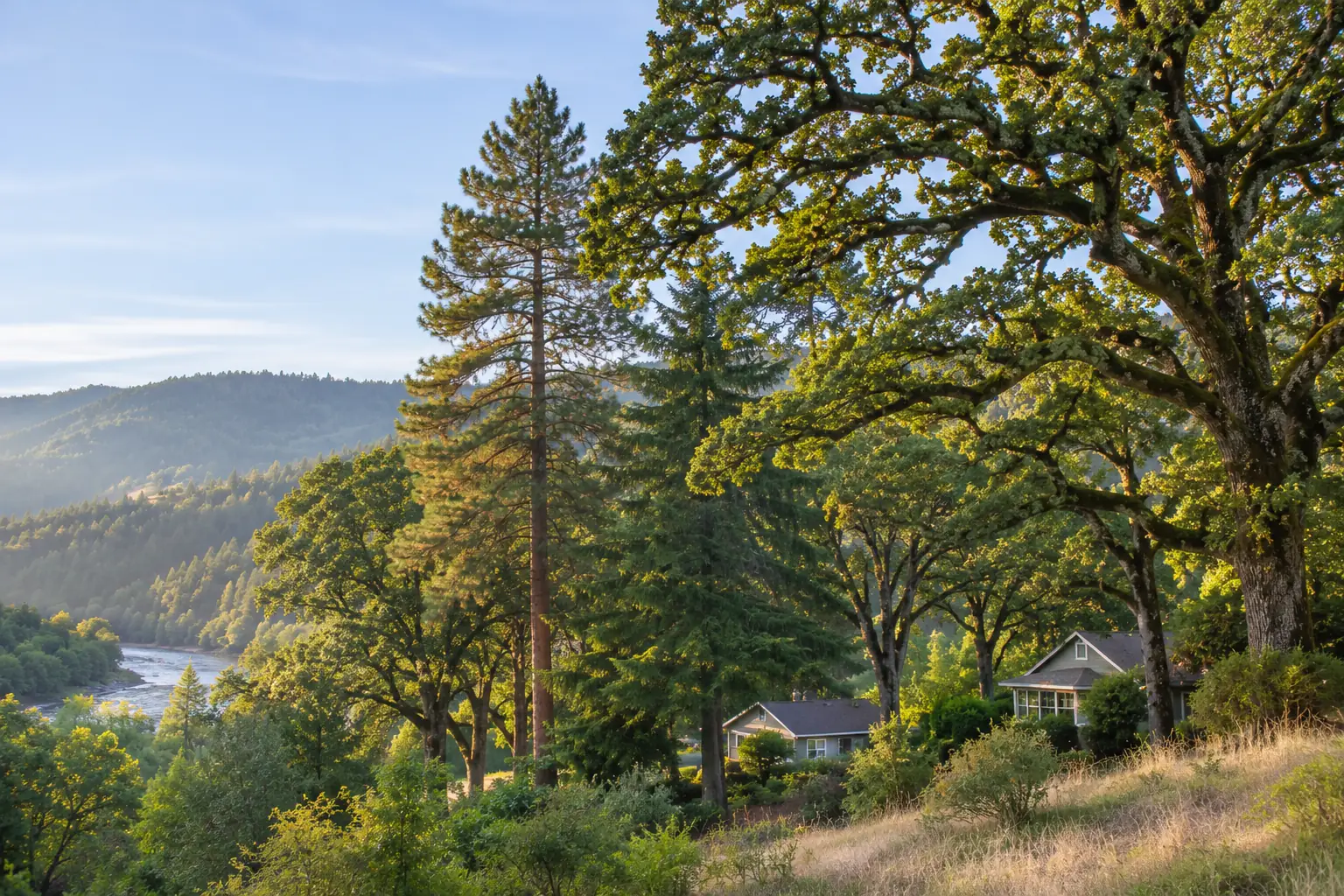
Because the dates move, check before you schedule. The closure covers all lands protected by the Southwest Oregon Forest Protection District in its listed regulated use areas, plus forestland within one-eighth mile. Ask the tree company whether your property falls inside it. Inside Gold Hill city limits, the city's own code also uses state forestry fire season as the trigger for its ban on bonfires and rubbish fires (Section 8.12.030 of Title 8).
Saw rules at each fire danger level
The 2026 proclamation sets power saw hours by the fire danger level of the day. Battery and electric chainsaws are included, not exempt.
| Fire danger level | Color | Power saws allowed |
|---|---|---|
| Low | Green | No hour limit |
| Moderate | Blue | Up to 1 p.m., and again past 8 p.m. |
| High | Yellow | Up to 10 a.m., and again past 8 p.m. |
| Extreme | Red | Not allowed |
Source: ODF Southwest Oregon District, Regulated Closure Proclamation No. 01, effective May 15, 2026.
The proclamation also requires each power saw to have one shovel and one fire extinguisher of at least eight-ounce capacity on hand. A fire watch of at least one hour is required after each saw is used. The State Forester or an authorized representative may approve a modification or waiver in writing.
In practice, a removal that would take one long day in spring can take several early mornings in August. At extreme danger, saw work stops entirely unless a waiver is granted. That is one reason a tree that is a hazard, but not yet falling, is better handled before summer.
Grinders, mowers and other equipment
Other tools used in tree work have their own limits under the same proclamation. Gas-powered stump grinders and chippers are not named separately, so they fall under its rule for other spark-emitting internal combustion engines.
- Spark-emitting engines (which includes grinders and chippers). Not allowed at extreme danger. Allowed at moderate danger up to 1 p.m. and again past 8 p.m., and at high danger up to 10 a.m. and again past 8 p.m. They must run in a cleared area, with a charged garden hose or a 2.5-pound or larger extinguisher at hand.
- Mowing dry, cured grass. Same hour limits, and battery or electric string trimmers are included. Mowing green, irrigated lawns is exempt.
- Cutting, grinding and welding metal. Same hour limits, in a cleared area with a hose or extinguisher.
The proclamation defines a cleared area as free of flammable vegetation for 50 feet in all directions. For a stump in dry grass, that can mean mowing or wetting the area first, within the allowed hours. The stump grinding page covers grinding in more detail.
Burning brush from tree work
Brush from tree work cannot be burned during fire season around Gold Hill. The ODF proclamation says backyard debris burning is prohibited throughout fire season. Jackson County's open and barrel burning page says no open or barrel burning is allowed in the county during fire season.
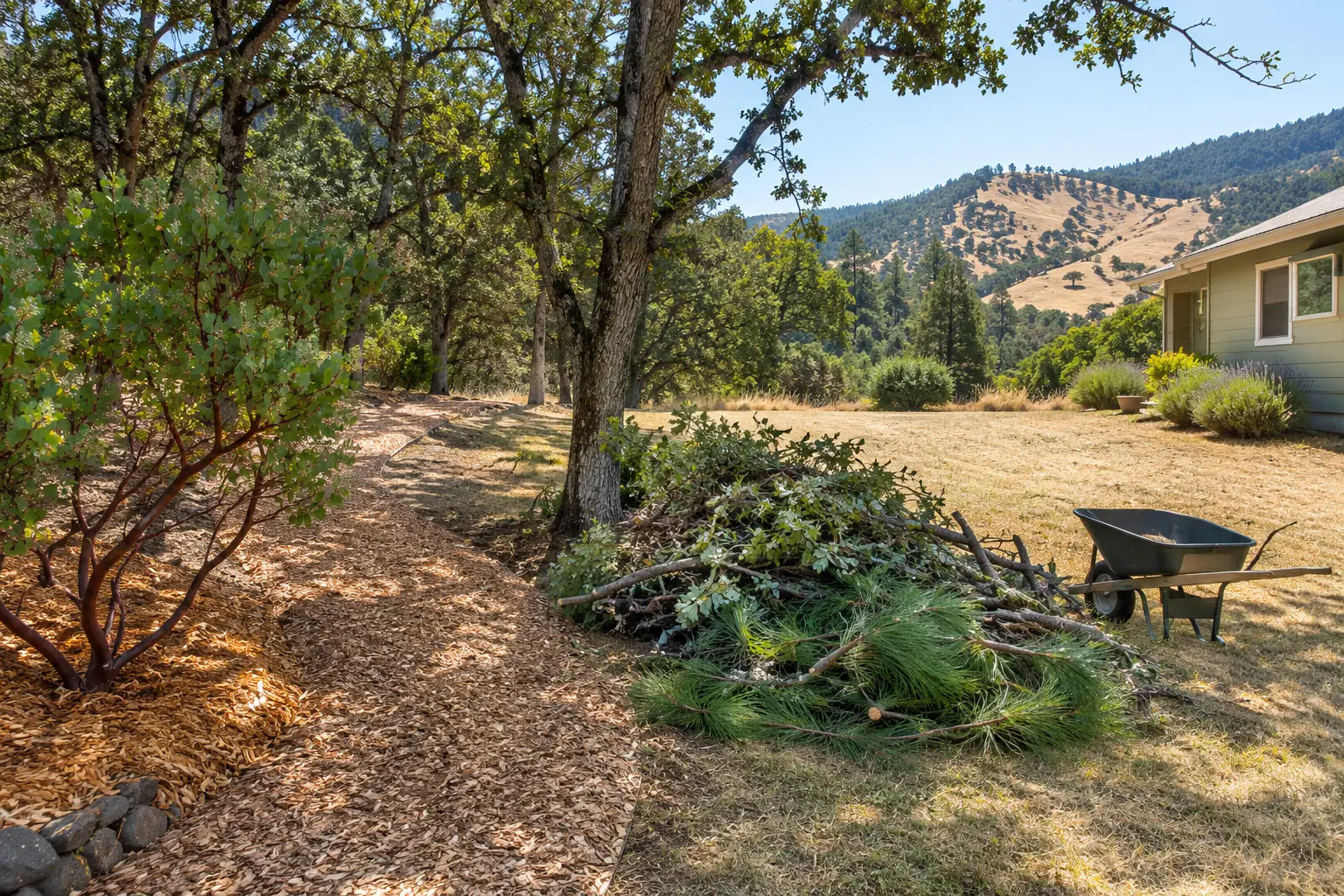
Outside fire season, burning is still limited. The county bans open and barrel burning from November 1 through the end of February inside the Air Quality Maintenance Area, and burning on any day depends on the daily advisory. Call the county burn line at 541-776-7007 and get a permit from your fire protection agency. Inside city limits, Gold Hill's code bars bonfires and rubbish fires during state forestry fire season.
For most summer jobs, chipping on site or hauling the brush away is the practical choice. Ask the company what its estimate includes.
Defensible space zones and your trees
Defensible space guidance tells you which trees near a home to prune, thin or remove before fire season. The Oregon State Fire Marshal uses three zones on its defensible space page, and OSU Extension's home ignition zone guide, EM 9247, adds tree spacing details.
| Zone | Distance from home | What it means for trees |
|---|---|---|
| Immediate | 0 to 5 feet | Keep it free of flammable plants and debris. Clear leaves and needles from roof and gutters. |
| Intermediate | 5 to 30 feet | OSFM: prune trees up 6 feet, space crowns at least 10 feet apart, remove brush under trees. OSU: keep canopies at least 10 feet from the house. |
| Extended | 30 to 100 feet or more | OSU: remove ladder fuels and small trees under larger ones, thin dense stands, keep mature fire-resistant trees. |
OSU notes the zone can reach 200 feet or more on steep slopes with thick vegetation, and that trees should be spaced farther apart on steeper ground. Many Gold Hill homes sit on slopes, so the hillside tree removal guide is worth reading too. OSFM also offers free defensible space assessments through its website.
Defensible space work is not an emergency. Book it as regular work, ideally before fire season starts.
Oaks, conifers and fire
Not every tree near a house is equally risky in a fire, and that affects what to cut. OSU Extension's EM 9436 says Oregon white oak resists fire partly through its corky bark. It adds that open oak stands with little shrub cover are less prone to crown fire than dense conifer stands. It also advises keeping brush piles left for wildlife low and more than 100 feet from structures.
For many lots around Gold Hill, that points toward keeping large oaks, limbing them up, clearing brush beneath them, and thinning crowded young conifers. The oak tree removal guide covers oaks in depth.
Near the river, fire clearing has limits. Gold Hill code keeps vegetation and tree cover within 75 feet of the top of the Rogue River bank, with limited exceptions (Section 17.49.040 of Title 17). For county land, the Jackson Soil and Water Conservation District says riparian vegetation may not be cleared to create wildfire fuelbreaks. See the Gold Hill tree rules guide.
The best time of year for tree work
For non-urgent tree work around Gold Hill, the easiest window is usually after fire season ends in fall and before it starts again in late spring. Saws can run all day, brush can be burned on legal burn days outside the winter ban, and long jobs fit in fewer visits.
A rough planning guide:
- Fall, after fire season ends. Good for removals, thinning and defensible space work. Bare soil on slopes should be covered before winter storms.
- Winter. Fine for most removals, though wet ground can limit heavy equipment. Burning is banned through February inside the Air Quality Maintenance Area.
- Early spring. A good time to finish defensible space work before fire season.
- Summer. Expect shorter saw hours, no burning, and possible stops at extreme danger.
Emergencies do not wait for the calendar. If a tree lands on a house or shuts a road in August, call (541) 855-3080 and find out from the company what that day's rules allow. See the emergency tree removal page. Costs for each kind of job are in the tree removal cost guide.
Frequently asked questions
Can trees be cut down in Gold Hill during fire season?
Trees can be cut, within limits. On ODF-protected land, power saws can run without an hour limit on low-danger days, only up to 1 p.m. and again past 8 p.m. on moderate days, only up to 10 a.m. and again past 8 p.m. on high days, and not at all at extreme danger.
Are electric chainsaws exempt from fire season rules?
Electric saws are not exempt. ODF's 2026 proclamation says battery and electric chainsaws are included in the power saw restrictions.
Can I burn the branches from my tree in summer?
Brush cannot be burned in fire season. ODF prohibits backyard debris burning throughout fire season, and Jackson County bans open and barrel burning during fire season. Chip or haul the brush instead.
How far from my house should trees be thinned for fire?
OSFM advises pruning trees up 6 feet and spacing crowns at least 10 feet apart within 30 feet of a home. OSU Extension says the zone can reach 200 feet or more on steep slopes.
When does fire season end in Jackson County?
ODF's Southwest Oregon District declares the end each fall, and the date changes. In 2025 it ended effective October 14. Check the current status before scheduling.
Is defensible space clearing an emergency tree job?
Fire clearing is regular work, not an emergency. Book it ahead of fire season so saws can run all day and the job takes fewer visits.