
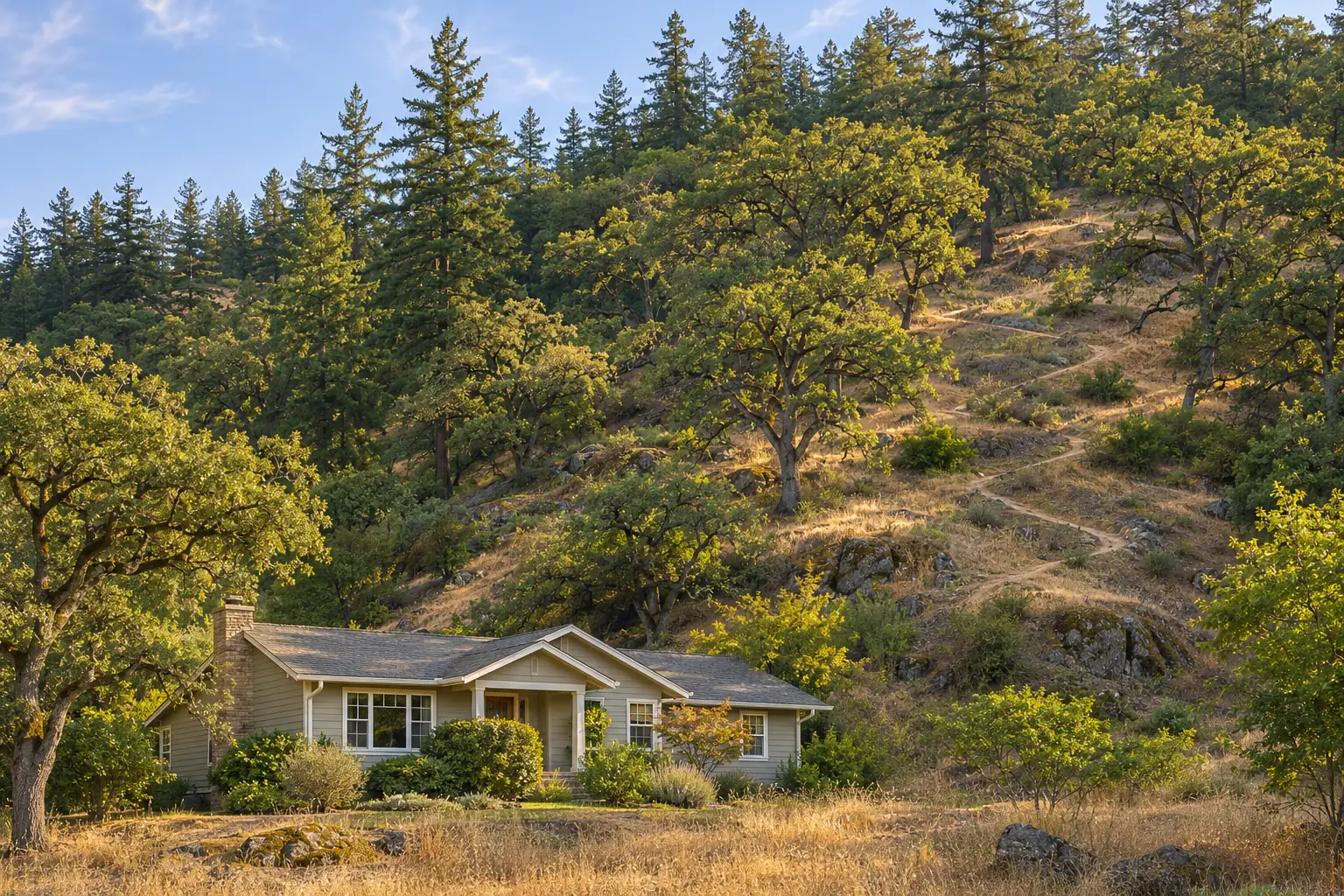
On a steep lot, a tree usually comes down in sections that are roped and lowered, because cut wood rolls and slides, and big equipment often cannot set up on the grade. Around Gold Hill, plan for erosion control afterward too. Call (541) 855-3080 to reach a CCB-licensed tree company, and have the slope walked before any price is quoted.
Tree Removal Gold Hill is a free referral service, not a tree company. It does no tree work. The company you are connected with plans the job, sets the price, and does the work if you hire it. Have that price handed over as a written estimate. This guide explains what slope changes about tree removal, how access, rigging and erosion are handled, and which Gold Hill rules come into play on steep ground and riverbanks. The home page explains how the service works.
What slope changes about tree removal
Slope changes three things: where the wood goes once it is cut, where equipment can stand, and where the soil goes after the tree is gone. On flat ground, a tree can often be felled into an open lawn and cut up where it lands. On a hillside, a log that hits the ground keeps moving.
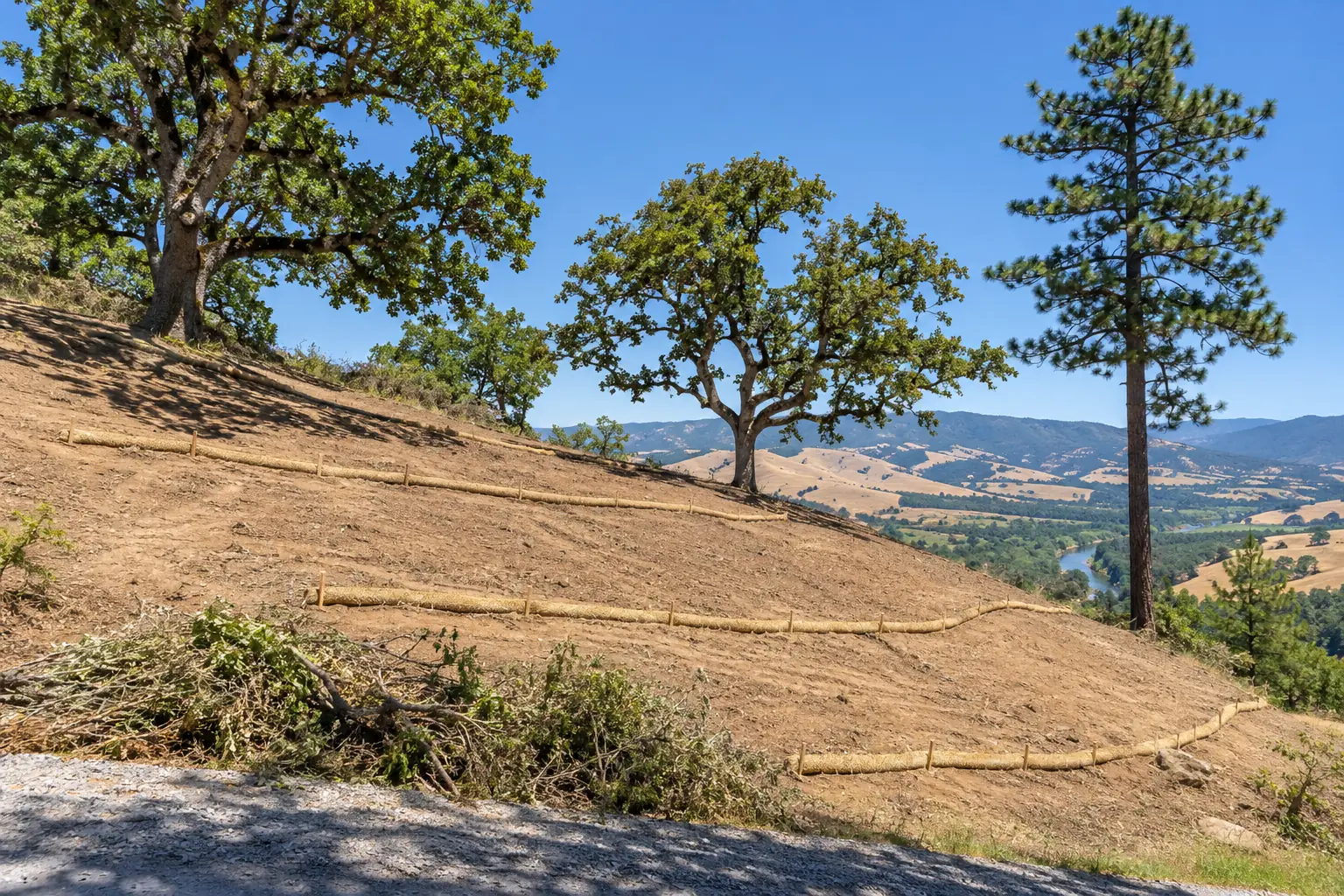
Gold Hill sits at about 1,093 feet on the Rogue River, per the City of Gold Hill, and many lots rise steeply from the river and the valley floor. The city's own code treats slope as a factor in development. For example, its erosion rules apply to smaller disturbances on slopes of ten percent or more (more on that below).
Here is how slope shifts the plan:
| Factor | Flat lot | Steep lot |
|---|---|---|
| Felling direction | Usually into open ground | Often limited, wood may roll |
| Equipment | Bucket truck, crane or tracked machine may set up close | May have to stay on the road above or below |
| Moving wood | Dragged or carried on level ground | Lowered on ropes, sometimes winched uphill |
| Soil after removal | Little risk of washing | Bare soil can wash in winter rain |
| Time and cost | Lower | Higher |
The tree removal cost guide explains how these factors show up in a price.
Getting equipment onto a hillside lot
Access decides much of how a hillside tree comes down. A bucket truck or crane needs a firm, fairly level spot near the tree. Many hillside driveways are too steep, too narrow or too soft after rain for that.
When there is no room for heavy equipment, the company sends a climber up the tree with ropes and saws instead. Wood is cut small enough to lower by hand, and brush is carried or dragged to a chipper parked on the road. That takes longer, which is why the same tree costs more on a slope.
Tell the company about these before it comes out:
- Driveway grade and width, and where a truck can park.
- Retaining walls, stairs and decks between the road and the tree.
- Septic tanks and drain fields, which should not take the weight of heavy equipment.
- Soft or wet ground, especially in winter and spring.
Rigging and lowering wood downhill
On a hillside, rigging is what keeps cut wood from becoming a runaway log. The climber ties a rope through a pulley high in the tree, then ties each section before cutting it. A ground worker lets the rope run under control so the piece is lowered to a chosen spot instead of dropping.
On steep ground, a few extra steps are common:
- Choose a landing zone. A flat spot, or one blocked on the downhill side, so pieces stop where they land.
- Block the rounds. Logs are chocked or pinned so they cannot roll toward a house, road or neighbor.
- Cut short. Shorter sections are lighter and less likely to tumble.
- Work from uphill. Workers stay above the wood whenever they can.
If the tree is above a house, a road or a neighbor's property, ask the company how it will keep wood from going downhill. That one question tells you a lot about how it has planned the job. If the tree is already down or hanging after a storm, see storm damage tree removal.
Erosion after a tree comes down
Once a tree is gone from a slope, its crown no longer breaks the rain and its roots slowly rot, so the soil underneath can start to move. Removing trees in fall can leave bare ground right before winter storms arrive.
Gold Hill code addresses this. Section 17.50.020 of Title 17 requires an approved erosion prevention and sediment control plan before certain building or grading permits are issued. The triggers include disturbance of 500 square feet or more of land or vegetation on slopes of ten percent or greater, and disturbance within 50 feet of the top of bank of a river or stream. The standards in Section 17.50.050 add that trees may not be used as anchors for equipment and that felled trees and brush must stay inside the work area.
A single tree removal not tied to a permit may fall outside those rules, but the ideas behind them are good practice on any slope:
- Leave the stump. On a steep bank, the stump and roots help hold the soil while new plants take hold. Stump grinding can wait or be skipped.
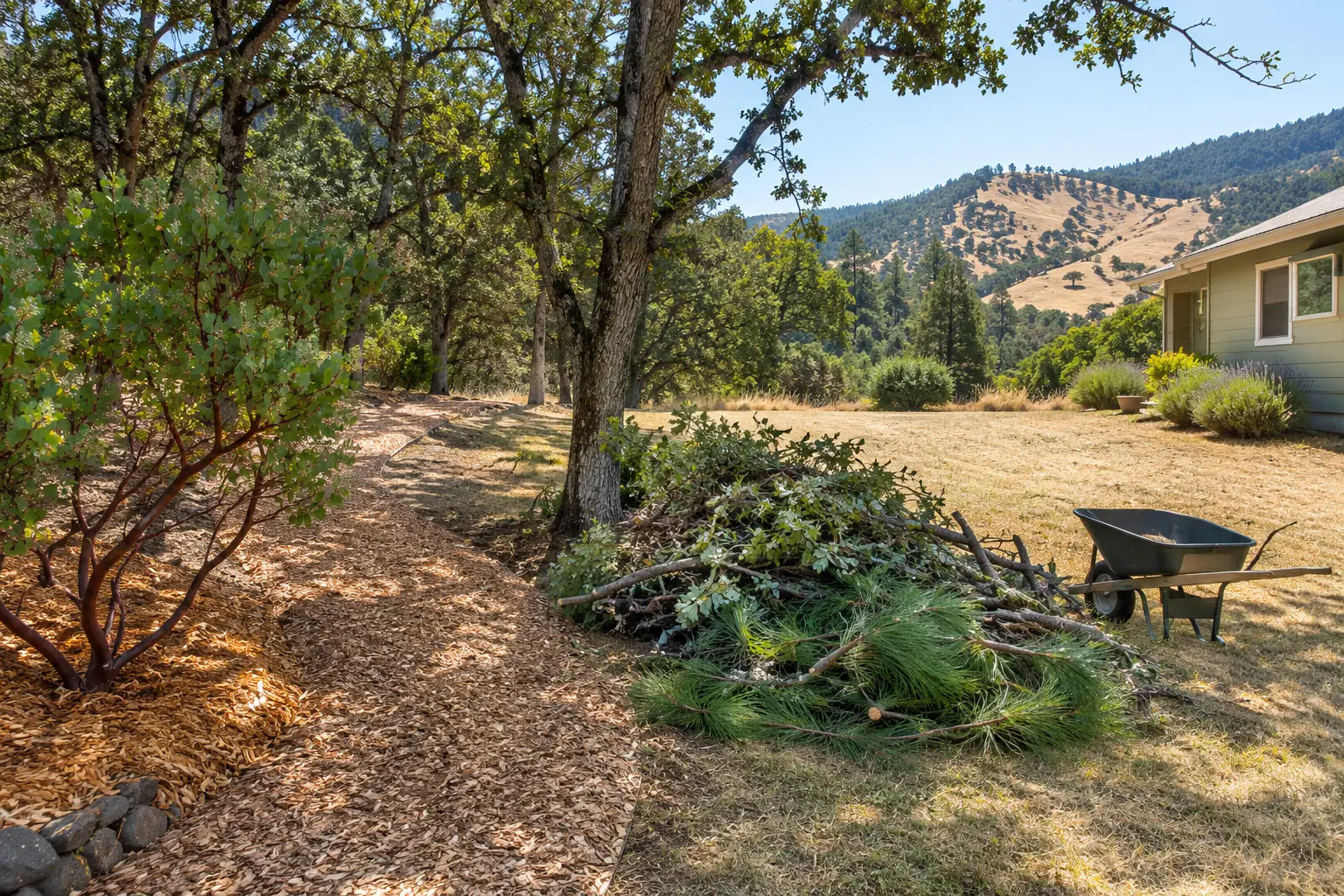
- Spread chips. Wood chips from the job, spread over bare soil, slow runoff.
- Replant. Seed or plant the bare area before the rainy season if you can.
- Watch for slumping. Check the slope after the first big storms.
Hillside lots along the Rogue River
A hillside lot that runs down to the Rogue River adds the city's riparian rules to the slope problem. Section 17.49.040 of Title 17 says vegetation and tree cover will be retained within 75 feet of the top of the Rogue River bank, with limited exceptions. Section 17.49.020 says no development, including grading, will be located closer than 75 feet to the top of bank except for listed uses.
On a steep riverbank, that usually means leaving trees and stumps in place unless one is a real hazard. If a tree near the bank is dead or leaning toward a house, call Gold Hill City Hall at (541) 855-1525 before cutting. Outside city limits, Jackson County applies a 75-foot setback on the Rogue as well, according to the Jackson Soil and Water Conservation District. The Gold Hill tree rules guide has more.
Slopes and wildfire
Fire moves faster uphill, so trees on a slope below a house matter more for fire safety than the same trees on flat ground. OSU Extension's home ignition zone guide, EM 9247, says the zone around a home can reach 200 feet or more on steep slopes with thick vegetation, and that trees should be spaced farther apart on steeper ground.
That can mean thinning small trees and brush below the house, and limbing up larger trees, more than removing big trees outright. Summer tree work on a hillside also runs into ODF's fire season saw rules. The fire season tree work guide explains both.
Oaks on slopes
Many hillside lots around Gold Hill hold oaks, and a healthy oak on a slope is often worth keeping. The Oregon Department of Forestry notes that Oregon white oak has a deep taproot and well-developed lateral roots that make it very wind firm. It also notes the species is most common on sites too exposed or dry for other trees, and the Oregon Conservation Strategy says oak habitat is generally found on drier, south-facing slopes and foothills. Before removing an oak on a slope, read the oak tree removal guide.
Questions to ask before hillside tree work
These questions help you compare companies and avoid surprises:
- Where will your truck park, and what equipment can reach the tree?
- Will the tree be felled whole or taken down in sections?
- How will you keep logs from rolling downhill?
- Will the stump stay, and if not, how will the bare soil be protected?
- What happens to brush and wood: chipped, hauled, or left?
- What is your CCB number?
Check the number on the Oregon CCB license search. Oregon requires a CCB or LCB license for tree removal, per the Landscape Contractors Board. For a big tree, also see large tree removal.
Frequently asked questions
Why does tree removal cost more on a hillside?
Wood has to be lowered on ropes instead of dropped, equipment often cannot reach the tree, and more work is done by hand. Each of those adds time. Ask the company to explain the method in its written estimate.
Should I grind the stump on a steep slope?
Often it is better to leave it. The stump and roots help hold soil while new plants grow. If you need it gone, spread chips or seed the bare soil soon after grinding.
Do I need an erosion control plan to remove a tree on a slope in Gold Hill?
Gold Hill requires one for certain building and grading permits, including 500 square feet or more of disturbance on slopes of ten percent or greater. Ask City Hall at (541) 855-1525 whether your project triggers it.
Can a crane be used on a hillside lot?
A crane works on some hillside lots. It needs firm, level ground to set up and a clear path for its boom. Many steep lots do not have that, so climbing and rigging is more common.
When is the best time to remove a tree on a slope?
Fall through spring avoids fire season saw limits, but bare soil before winter rain can wash. Plan to cover or replant the ground soon after removal, whatever the season.