Taking down a large tree in Gold Hill usually means cutting it in sections and lowering them on ropes, or, on open acreage, felling it whole. Call (541) 855-3080 to reach one tree service, a separate business carrying an Oregon CCB license. Get it to size the tree up and talk you through its method, and insist on an estimate on paper before any cutting.
Tree Removal Gold Hill is a referral service, not a tree company, and it does no tree work. The company you are connected with does the inspection, the pricing and the work, and you decide whether to hire it. This page explains how a big tree comes down, why the same tree can be a simple job on a pasture and a slow one beside a house, and which rules matter for large tree removal in Gold Hill and the rural land around it. The home page explains the line in more detail.
How a large tree is taken down
The method depends on what is under the tree and how much room there is to drop it. There are three common approaches, and a big job may mix them.
Felling whole. On acreage with a clear landing zone, the company cuts a notch on the side it wants the tree to fall, then a back cut that leaves a strip of hinge wood to steer it. This is the fastest method and usually the least expensive, but it needs open ground at least as long as the tree is tall, plus margin.
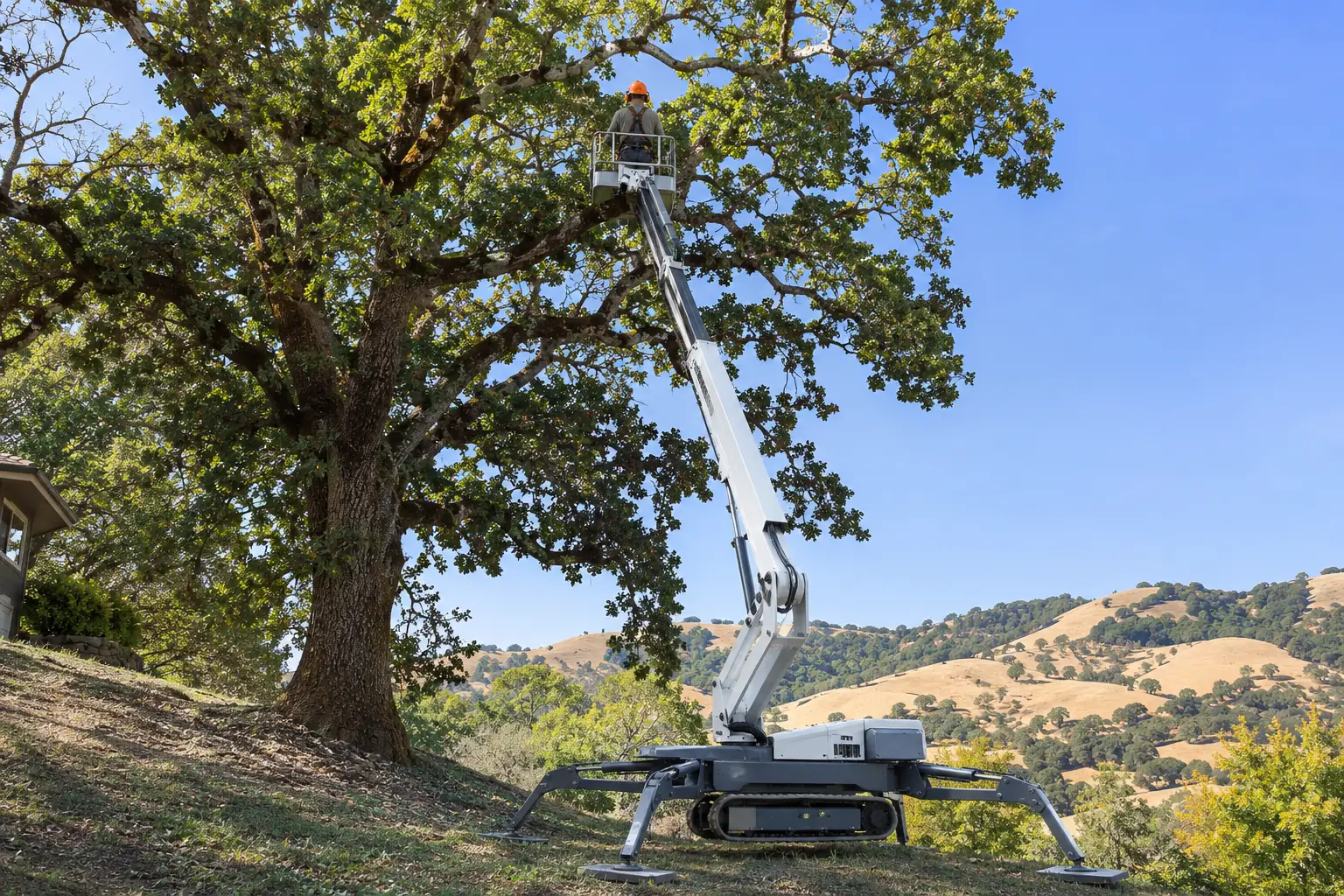
Sectional removal with rigging. Near a house, a shop or a fence, a climber or a lift works from the top down. Limbs come off first, then the trunk in short pieces. Heavy pieces are lowered on ropes through a pulley tied high in the tree, with a ground worker controlling the speed. This takes longer and costs more, and it is how most large trees on town lots come down.
Crane-assisted removal. For a very large tree with no safe place to drop wood, a crane can lift sections over the house. It needs a firm, level spot to set up and a clear path for the boom. Steep or soft ground can rule it out.
Ask the company which method it plans and why. If it suggests a crane, ask where the crane will sit and what that means for your driveway, lawn and septic area.
Big trees on hillside lots and riverbanks
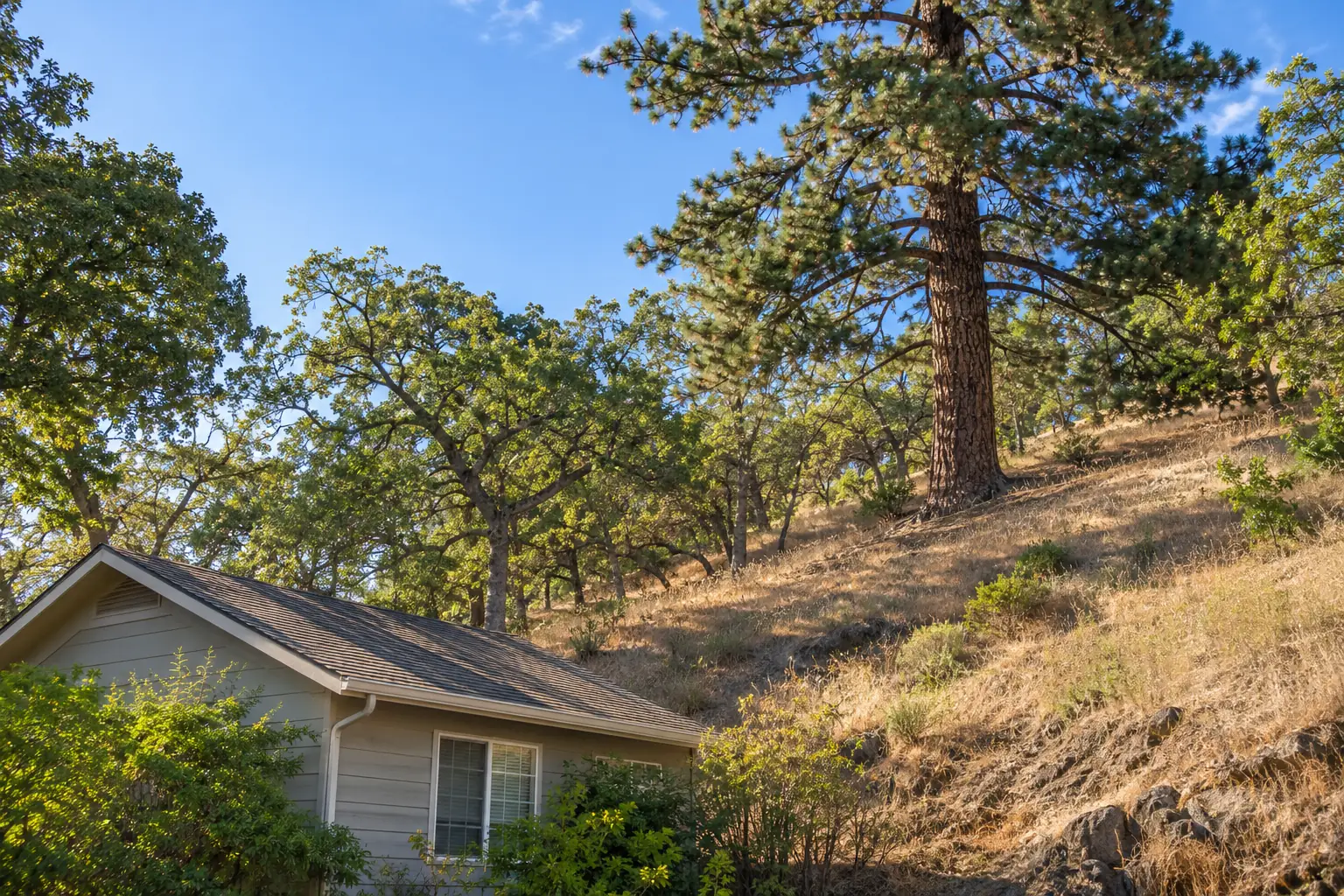
Slope and water are the two local conditions that most change a large tree job around Gold Hill. The city sits at about 1,093 feet on the Rogue River, according to the City of Gold Hill, and many lots climb steeply from the river and the valley floor.
On a slope, wood wants to roll downhill once it is cut. Rounds may need to be blocked or tied off. A crane or bucket truck may not be able to set up, which pushes the job toward climbing and rigging. Equipment may have to be parked on the road above or below the house. The hillside tree removal guide covers access and erosion in more depth.
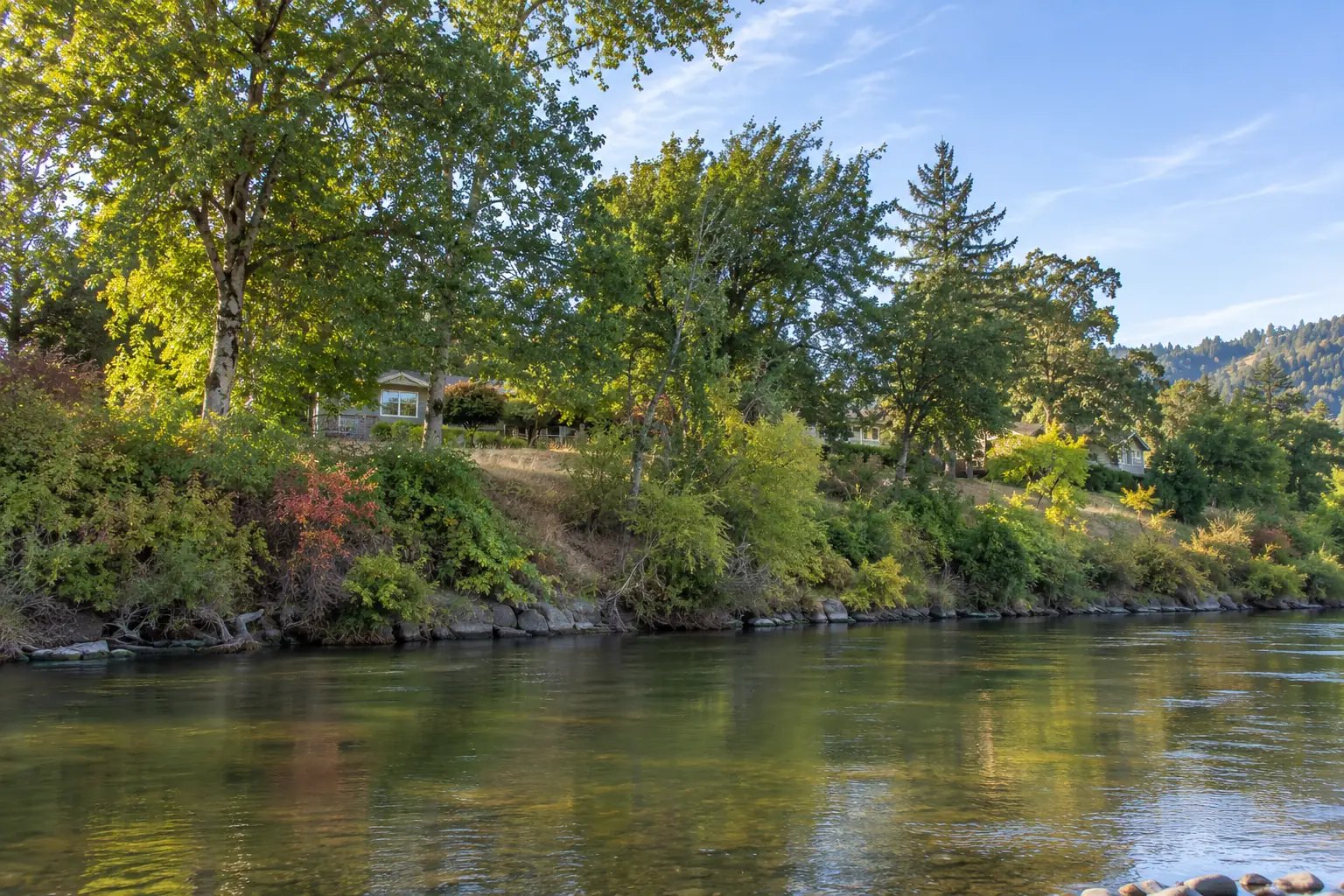
Near the river, Gold Hill's code adds a rule. Section 17.49.040 of Title 17 says vegetation and tree cover will be retained within 75 feet of the top of the Rogue River bank. Exceptions cover non-native plants removed under a landscape plan, water-related uses, and forestry under the Forest Practices Act. Before taking a big tree down inside that band, call the city at (541) 855-1525. The Gold Hill tree rules guide has more on this and on county rules for land outside city limits.
Large trees on small town lots
On a small city lot, the tree is often bigger than the space around it. Branches reach over the house, the neighbor's roof, a fence and the street at once. Every limb has to be lowered, not dropped.
Plan for these things:
- Parking. A chip truck and trailer need curb space. Ask the company whether it needs part of the street and how long.
- Overhead clearance. City code requires growth over a roadway to clear thirteen feet six inches and growth over a sidewalk to clear eight feet (Section 8.08.100 of Title 8). A limb over the street may need to come down first.
- Neighbors. If branches cross the property line, talk to your neighbor before work day. It avoids surprises when rigging lines go over a fence.
- Service line. If the tree is near the wire from the pole to your house, Pacific Power offers a free temporary disconnect so work near it can be done safely, per its tree page.
Large trees on rural acreage
On rural land around Gold Hill, the challenge is usually distance and ground conditions rather than tight space. Long gravel driveways, gates, culverts and soft winter ground decide what equipment can get in.
Tell the company about:
- Driveway width and the tightest turn.
- Any bridge or culvert with a weight limit.
- Wells, septic tanks and drain fields near the tree.
- Fences and livestock.
If you plan to sell logs from your land or take down many trees at once, the Oregon Department of Forestry may need to be told first. ODF's notification page says notifications of forest operations must be filed at least 15 days before the work starts, through its online system, FERNS. Removing one tree beside a house is normally a different matter from a timber harvest, but if logs will be sold, ask ODF which applies.
Large oaks deserve a second look
Big oaks are one of the trees homeowners most often ask about, and they are also among the most valuable for wildlife. The Oregon Conservation Strategy lists oak woodlands as a Strategy Habitat in the Klamath Mountains ecoregion, which includes the Rogue Valley. It recommends keeping large oaks and removing conifers that crowd them.
That does not mean an oak can never come down. A large oak that is dead, split, or leaning over a house may need to go. But if a big oak is healthy and the worry is a single heavy limb, ask whether pruning would solve it. The oak tree removal guide goes into when an oak should come down.
Timing a large removal around fire season
Large removals run long, and in summer saw use follows ODF's daily fire danger level. ODF's 2026 regulated closure proclamation for the Southwest Oregon District, effective May 15, 2026, allows power saws without an hour limit on low-danger days. At moderate danger they are allowed up to 1 p.m. and again past 8 p.m., and at high danger up to 10 a.m. and again past 8 p.m. At extreme danger they are banned. Each saw needs a shovel, an extinguisher and a one-hour fire watch after use. Battery and electric saws are included.
A big job that would take one day in March can stretch over several mornings in August. If the tree is not a hazard, fall through spring is usually the easier time. The fire season tree work guide has the full schedule.
What drives the price of a big tree
Height and trunk size matter, but access and what sits under the tree often matter more. A 70-foot pine on a pasture can cost less than a 50-foot oak over a house on a slope. The tree removal cost guide has dated price ranges from published sources. The written estimate from the company that looks at your tree is the one that counts.
Before you sign, confirm the company's CCB number on the Oregon CCB license search. Oregon requires a CCB or LCB license for tree removal, per the Landscape Contractors Board. If you want the stump gone too, see stump grinding.
Frequently asked questions
How long does it take to remove a large tree?
A big tree on open ground can be down in a few hours. A large tree over a house, rigged down in sections, can take a full day or more, plus cleanup. Fire season saw limits can stretch it further.
Will a crane be needed for my tree?
Only some jobs need one. A crane helps when there is no safe place to lower wood, but it needs firm, level ground to set up. The company will tell you after it sees the tree and the site.
Can I keep the wood from my tree?
Most companies will leave the wood if you ask. Have them cut the trunk into rounds and leave them, and say so before work starts so it is in the estimate. Oak and other hardwoods are heavy, so ask where the rounds will be left.
Do I need a permit to remove a big tree in Gold Hill?
The city code reviewed for this site does not set a general tree permit for private lots, but trees within 75 feet of the Rogue River bank fall under a retention rule. Call Gold Hill City Hall before cutting near the river.
Should a healthy large oak be removed?
A healthy oak can often stay. Large oaks are valuable habitat in southern Oregon. If the concern is one limb, pruning may solve it. Ask the company whether removal is really needed.