
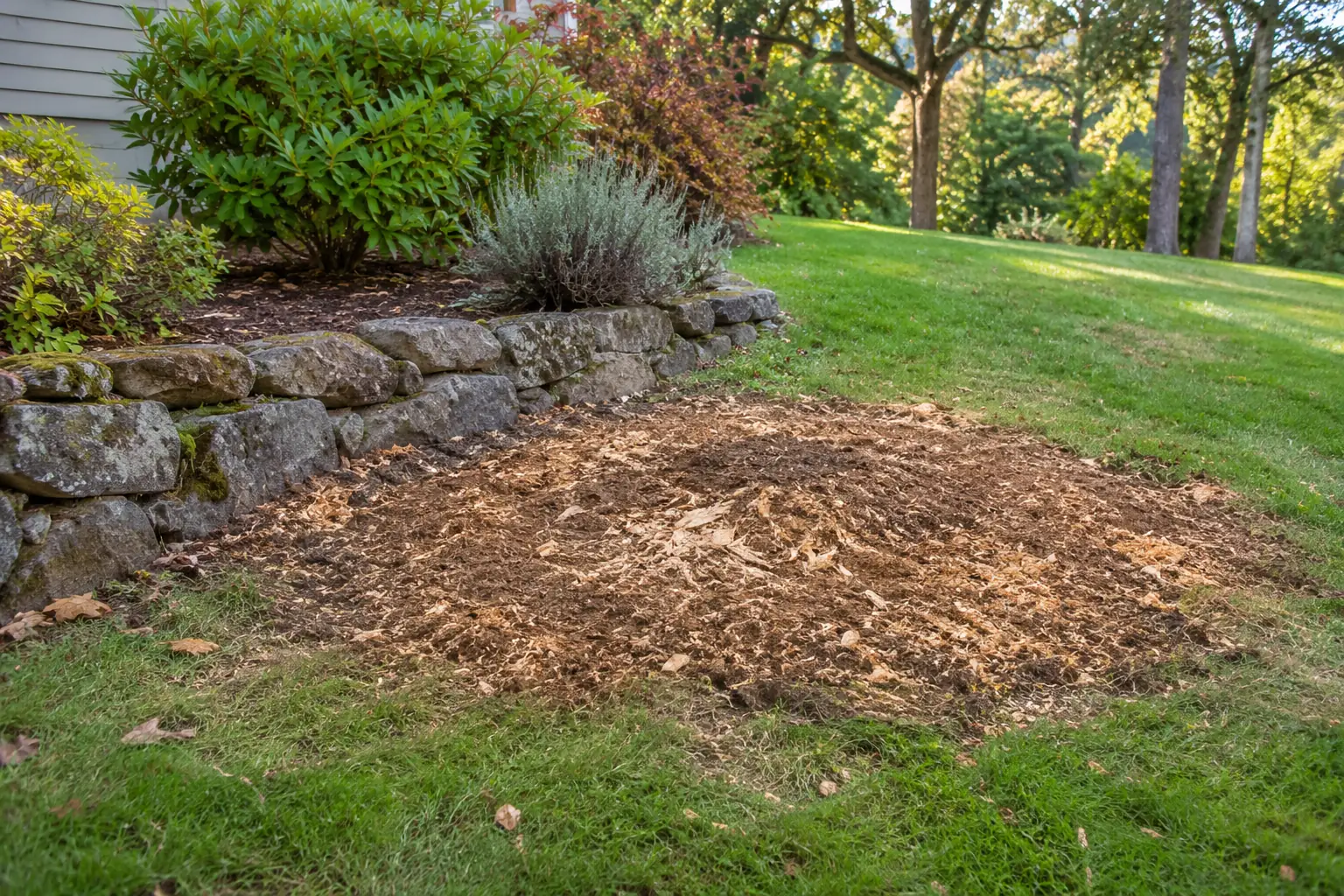
Stump grinding chews a tree stump down below the soil with a rotating cutter wheel, leaving wood chips and a shallow hole you can fill and plant over. For stump grinding in Gold Hill, call (541) 855-3080 to reach one tree service, a separate business carrying an Oregon CCB license. Get it to see the stump in person and to commit a price to paper first.
Tree Removal Gold Hill only passes your request along at no charge. Nobody here grinds stumps or cuts trees; the licensed business you reach prices the job and does the work, and hiring it is your call. This page covers how grinding works, when a stump is better left alone on a slope or near the river, what to check before the grinder arrives, and how fire season affects the timing. The home page has more about the line.
How stump grinding works
A stump grinder is a machine with a heavy wheel set with carbide teeth. The operator swings the spinning wheel back and forth across the stump, lowering it a little with each pass, until the wood is cut down below grade. The stump turns into a pile of chips mixed with soil.
Grinders come in sizes. Small walk-behind machines fit through a garden gate. Larger tracked or towed machines grind faster but need wider access. On a tight town lot with a 36-inch gate, ask whether the company has a machine that will fit, or whether a fence panel needs to come down.
Grinding is different from stump removal. Removal digs out the stump and the large roots, leaving a big hole and a lot of disturbed soil. Grinding leaves the roots in the ground to rot slowly. For most yards, grinding is what people want.
Grind it or leave it
Not every stump needs to be ground. Whether to grind depends on what you want to do with the spot and on what kind of tree it was.
Reasons to grind:
- You want to plant grass, a garden bed or a new tree in the same place.
- The stump is a tripping hazard near a path or play area.
- You need the space for a driveway, shed or patio.
- The stump is sending up sprouts you do not want.
Reasons to leave it:
- The stump is on a steep bank where the roots help hold the soil.
- It is inside the 75-foot riparian band along the Rogue River (see below).
- It is out in a pasture or woods where it bothers no one.
Oaks are a special case. The Oregon Department of Forestry notes that Oregon white oak can sprout from cut stumps and root collars. If you leave an oak stump, expect shoots, and decide whether you want to keep one as a new tree or cut them back. The oak tree removal guide has more on oaks.
Before the grinder arrives
The most important step before grinding is finding out what is underground near the stump. A grinder wheel can reach several inches below the soil, and roots often wrap around water lines, sprinkler pipe and buried cable.
- Call 811 or ask the company to arrange a locate. Pacific Power's tree page advises calling 811 at least 48 hours before digging so underground utilities can be marked.
- Mark your own private lines that 811 does not cover: irrigation, a line to a shop or well pump, low-voltage lighting, a septic line.
- Move cars, pots and outdoor furniture away. Grinders throw chips and small stones.
- Tell the company how deep you need the stump ground. Lawn may need only a few inches below grade. A new planting or a paver patio may need more.
Stumps on slopes and near the river
On a hillside lot or a riverbank, a stump and its roots are part of what holds the soil, so think before grinding there. Many Gold Hill lots are steep, and grinding opens bare soil right where winter rain runs off.
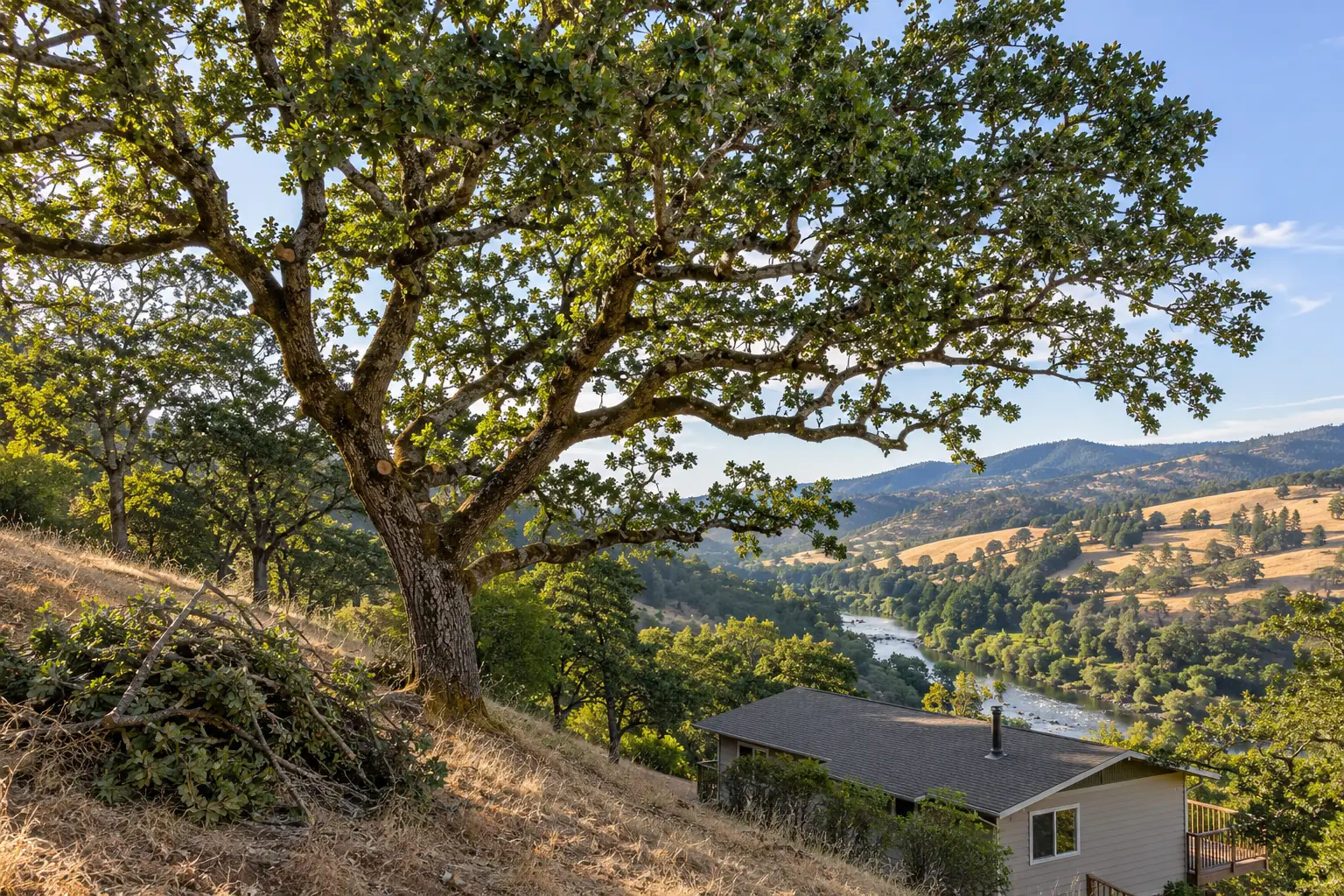
Gold Hill's code sets out erosion control rules. Section 17.50.020 of Title 17 requires an erosion prevention and sediment control plan before certain building or grading permits are approved. That includes disturbance of 500 square feet or more on slopes of ten percent or greater, and disturbance within 50 feet of the top of bank of a river or stream. Grinding one stump in a lawn is not the same as a grading project, but if the work is tied to a permit, ask the city what applies.
Near the river, Section 17.49.040 of the same title says vegetation and tree cover will be retained within 75 feet of the top of the Rogue River bank, with limited exceptions. A stump inside that band is often best left alone. Call Gold Hill City Hall at (541) 855-1525 before grinding there, and see the Gold Hill tree rules guide. For more about steep lots, read the hillside tree removal guide.
If you do grind on a slope, spread the chips back over the bare soil or seed it soon after. Chips slow runoff while new roots take hold.
Grinding during fire season
A stump grinder is a spark-emitting machine, and during fire season its hours follow the Oregon Department of Forestry's daily fire danger level on and near protected land. ODF's 2026 regulated closure proclamation for the Southwest Oregon District covers spark-emitting internal combustion engines not named elsewhere in the order. They are banned at extreme fire danger. At moderate danger they are allowed up to 1 p.m. and again past 8 p.m., and at high danger up to 10 a.m. and again past 8 p.m. The work must be in a cleared area with a charged hose or a 2.5-pound extinguisher on hand.
Steel teeth hitting a rock can throw sparks into dry grass. In late summer, many people wait until fall rain. The fire season tree work guide explains the danger levels.
What to do with the chips and the hole
After grinding, you are left with a mound of chips and soil roughly where the stump was. The company may rake it into the hole, haul it away, or leave it, so ask which is in the price.
- To plant grass: remove most of the chips, fill with topsoil, and let it settle before seeding. Wood chips mixed into soil can tie up nitrogen as they break down.
- To plant a tree: pick a spot a few feet away from the old stump if you can, since old roots remain below.
- To mulch: chips work well spread around shrubs and on paths.
Expect the spot to sink a little over the next year as buried roots rot. Top it up with soil as needed.
What stump grinding costs
Stump grinding is usually priced by the stump's diameter, with a minimum charge. LawnStarter's stump grinding cost guide, updated October 5, 2026, gives a national average of $272 per job and a typical range of $131 to $438. It says many companies charge $2 to $5 per inch of diameter with a minimum near $100, and that extra stumps on the same visit usually cost less.
Those are national figures. Access, slope, rocky soil and travel distance change the price around Gold Hill. The company's written estimate is what counts. If you are also taking a tree down, ask for grinding in the same quote, since the crew and machine are already there. See the tree removal cost guide for removal prices. Before you hire, check the company's number on the Oregon CCB license search. Stump grinding needs a CCB or LCB license in Oregon, per the Landscape Contractors Board.
Frequently asked questions
How deep does stump grinding go?
It varies by machine and job. Ask for the depth you need: a few inches below grade for lawn, more for a new bed or patio. Tell the company before it starts so the estimate matches.
Will the roots keep growing after grinding?
Most roots die and rot once the stump is gone. Some trees, including Oregon white oak, can sprout from roots and root collars, so watch for shoots in the first season and cut them back.
Is stump grinding an emergency service?
Stumps are not emergencies. Book grinding as a regular appointment, ideally outside the hottest part of fire season.
Can I grind a stump near the Rogue River?
Gold Hill code keeps vegetation and tree cover within 75 feet of the top of the Rogue River bank, with limited exceptions. Leaving the stump is usually the safer choice there. Ask the city first.
Do I need to call 811 before grinding a stump?
A locate is a good idea. Pacific Power advises calling 811 at least 48 hours before digging. Grinder teeth reach below the soil where lines can run. Ask the company whether it handles the locate.